
Operators use pipeline pigs to clean, batch, dewater, and inspect lines, with pig launchers and receivers as the core equipment for launching and retrieving those pigs.
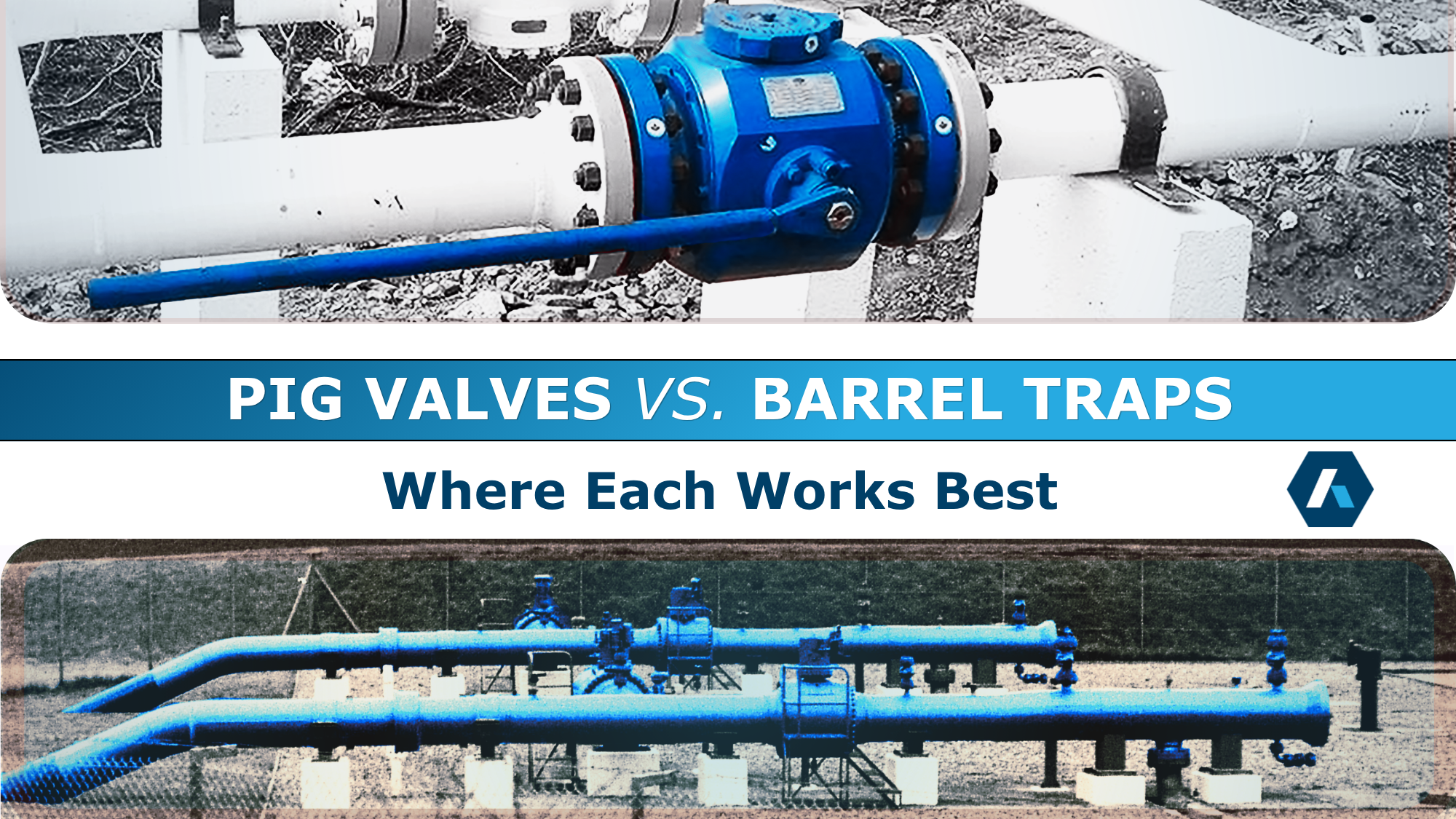
Two common launcher/receiver systems are barrel traps and pigging valves. Both accomplish the same objective, but with fundamentally different constructs that lead to distinct practices and best use cases.
Barrel Trap Design
A typical barrel-trap station is built around a cylindrical vessel (the barrel) consisting of a major barrel, a reducer, a minor barrel nominally sized to the mainline pipe, and a closure for loading and unloading pigs [2]…
Pigging Valve Design
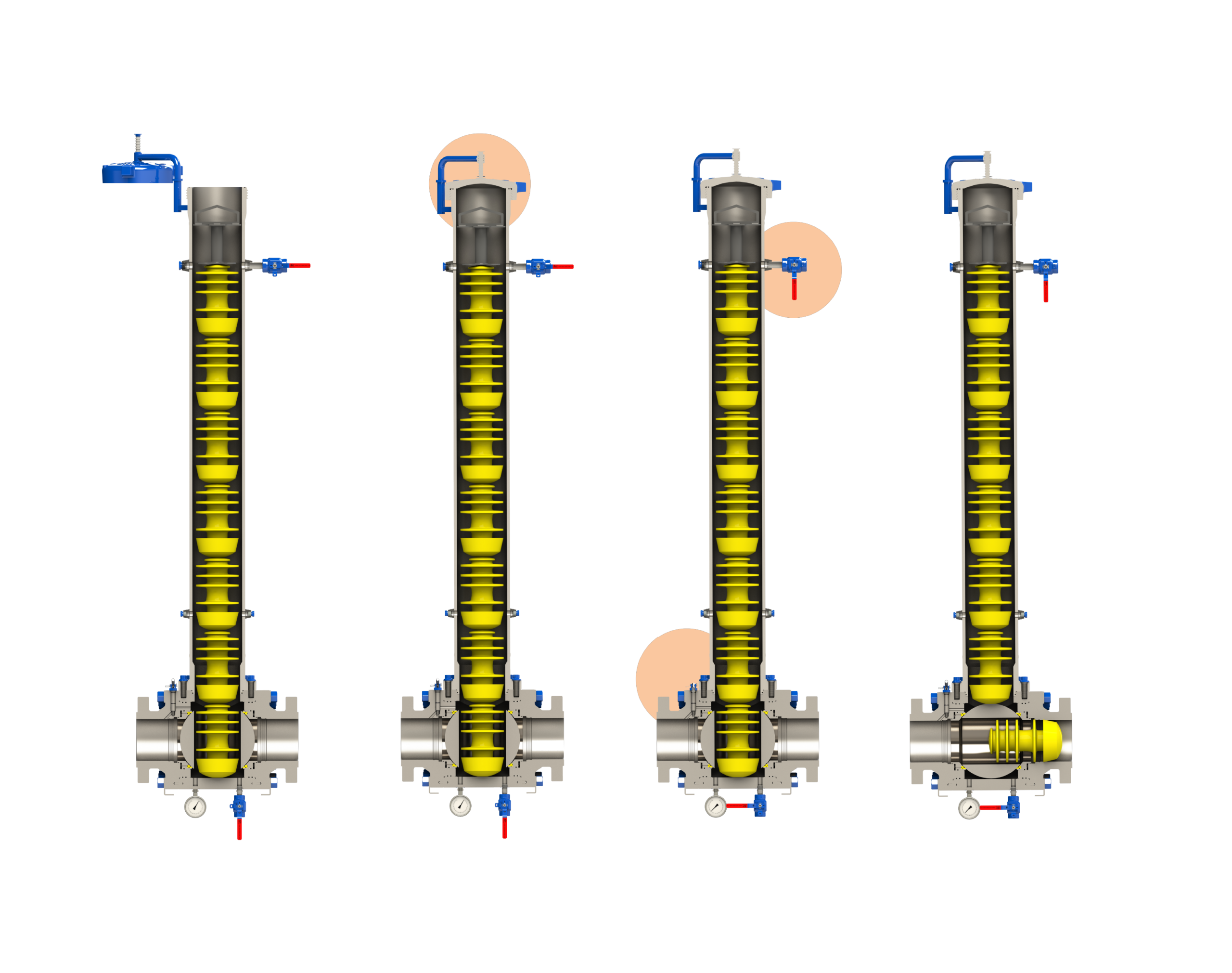
A pigging valve (also known as a scraper valve or simply pig valve) is an alternative to the barrel trap. The pig valve replaces the cylindrical vessel with a specialized hollow, trunnion-mounted, quarter-turn ball valve [5]. Like the major barrel, the ball is the cavity/chamber that the pig is inserted into or removed from. There is also a stopper plate in the valve, usually between the internal ball and tail pieces [5]…
In this article, we explore those practices and differences to derive where each thrives and where each is weaker. For both traps and pig valves we review:
- Design and Components.
- Operational Sequence.
- Key Differences and Benefits.
- Ideal Operational Situations.