Compact Footprint
Easier to fit into constrained sites and existing piping layouts.

A compact, valve-based alternative to conventional barrel traps.
Launch and receive pipeline pigs with less supporting piping and auxiliary equipment than a conventional barrel trap arrangement.
*Based on Argus' published comparison of vented physical volumes by valve size. Actual results depend on the application.

Conventional pig launchers and receivers use a barrel with associated piping and valves. The Argus Pig Valve offers a more compact alternative for suitable pigging applications.
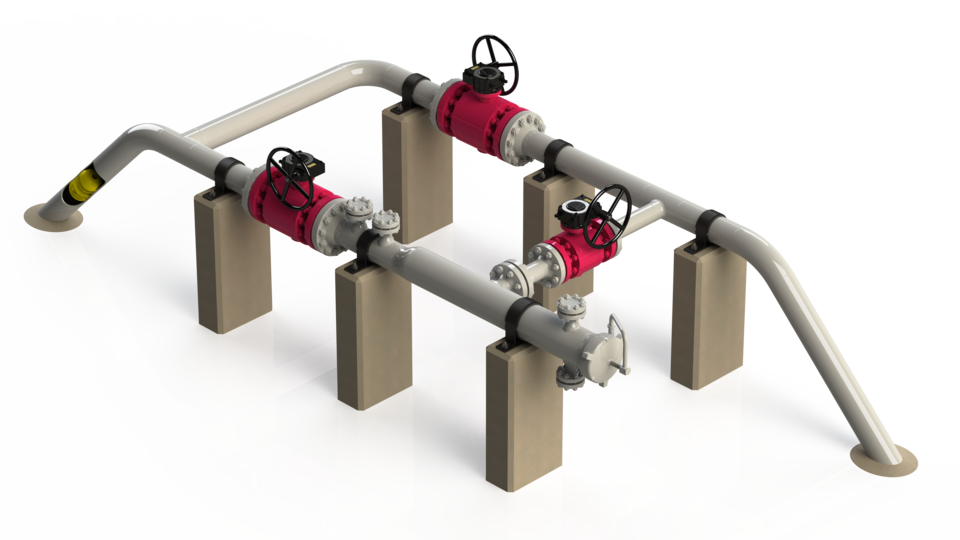
Barrel-based layout with associated piping and valves.
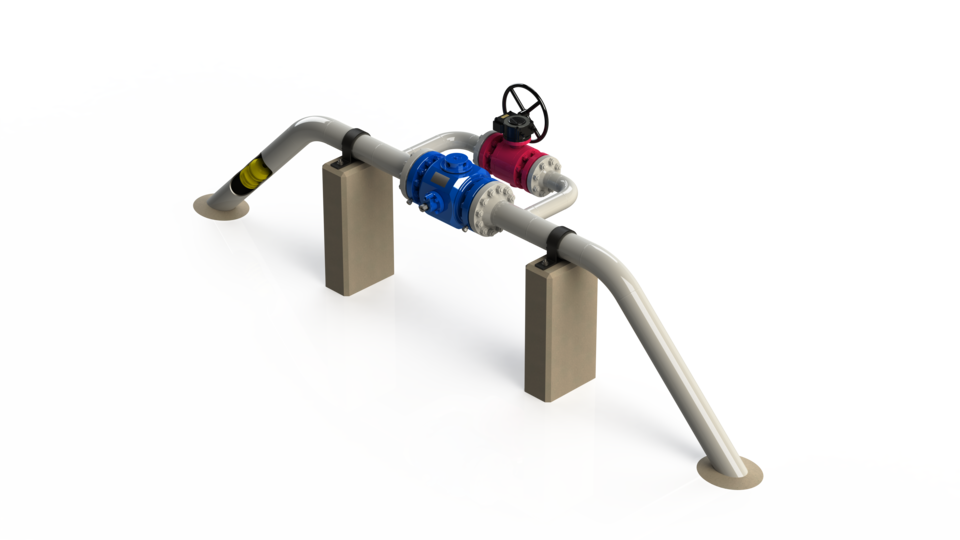
Compact valve-based receiving arrangement with less supporting equipment.
Illustrative receiving arrangements; not engineering drawings to scale.
Easier to fit into constrained sites and existing piping layouts.
Requires less supporting piping and auxiliary equipment than barrel traps, simplifying installation and maintenance.
A smaller valve cavity means less media to vent during applicable pigging operations.
Double-block-and-bleed construction also supports use as a conventional block valve, potentially reducing additional valves.
Simple, direct operation means fewer steps and less opportunity for operator error.
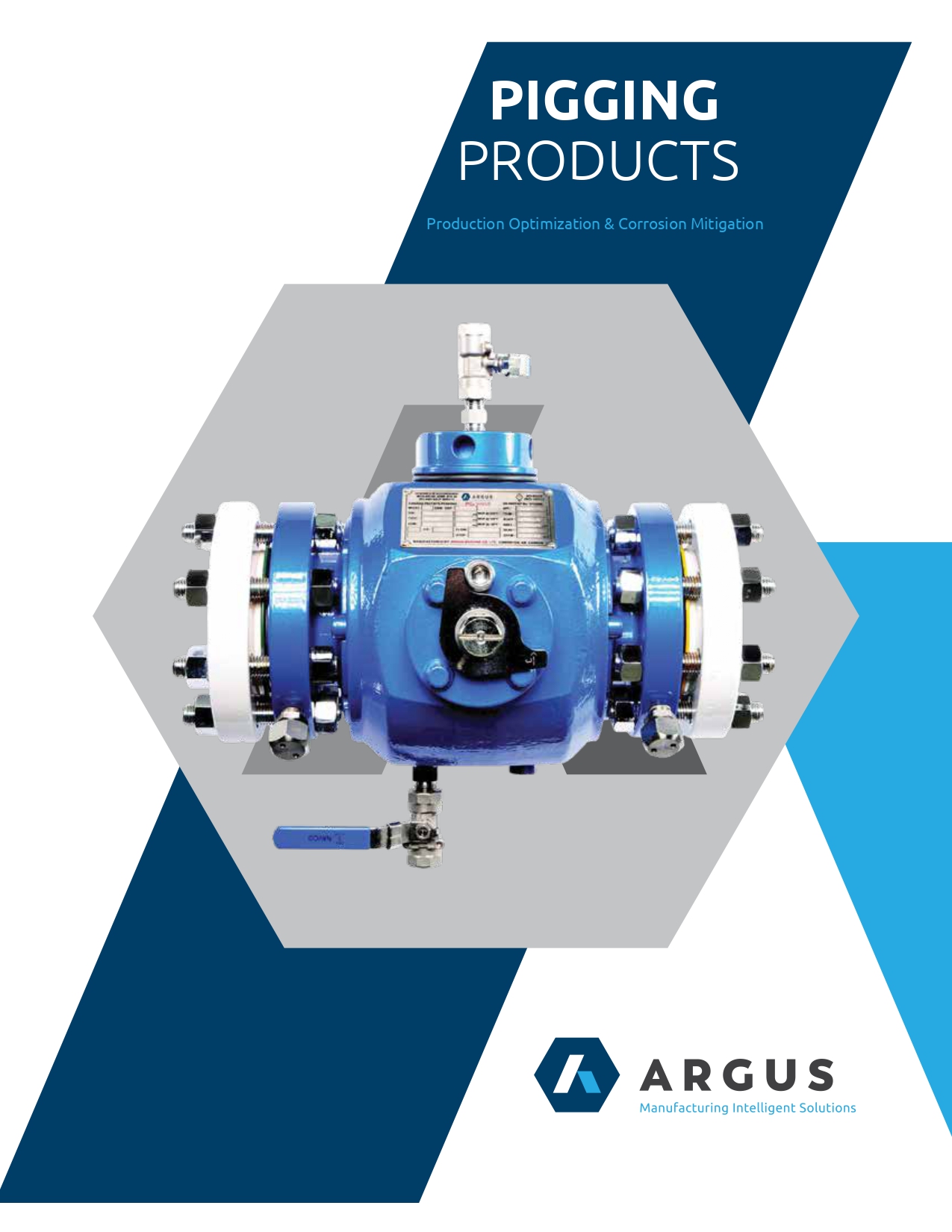

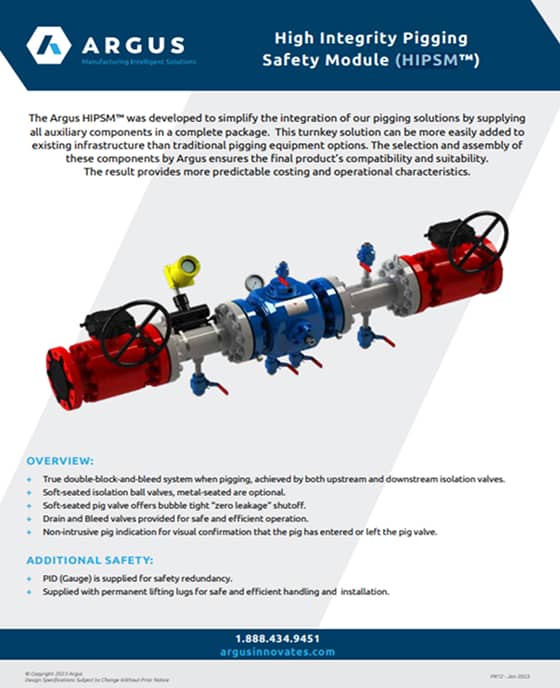
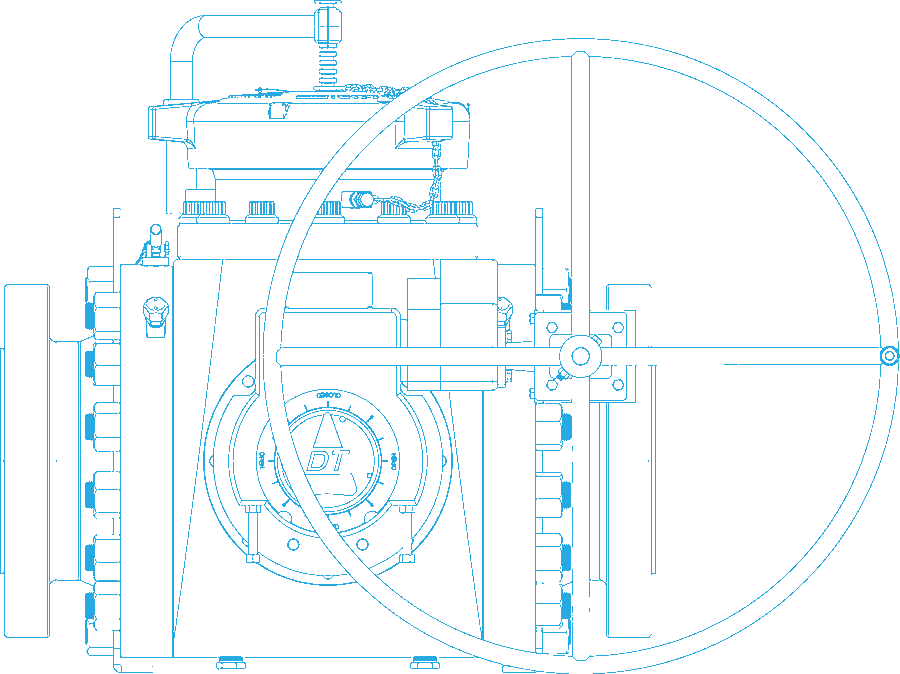
Explore the valve features behind compact installation, lower venting volume, direct pig access and DBB isolation.
SELECT A FEATURE
Click a point on the valve or choose a topic
The Pig Valve uses a vertically oriented entry cap rather than a horizontal barrel closure. Argus documents a Pressure Alert Port and a non-impact wrench and cap as safety features.
The vertical opening and pressure warning address hazards associated with traditional barrel access.
Hotspots indicate exterior areas only, not precise internal components. Confirm configuration and pig compatibility with Argus.

The detailed entry-cap safety features in the Argus brochure are described for 6" ASME Class 600 and below. Confirm available features for other configurations.
Provides a visual and audible warning if pressurized media remains before the entry cap is fully opened.
Eliminates the need to hammer on the entry cap, addressing associated sparking and material-failure hazards.
Top-entry access avoids the horizontal pressurized opening associated with conventional barrel closures.
An optional interlock is available to help enforce the intended operating sequence.
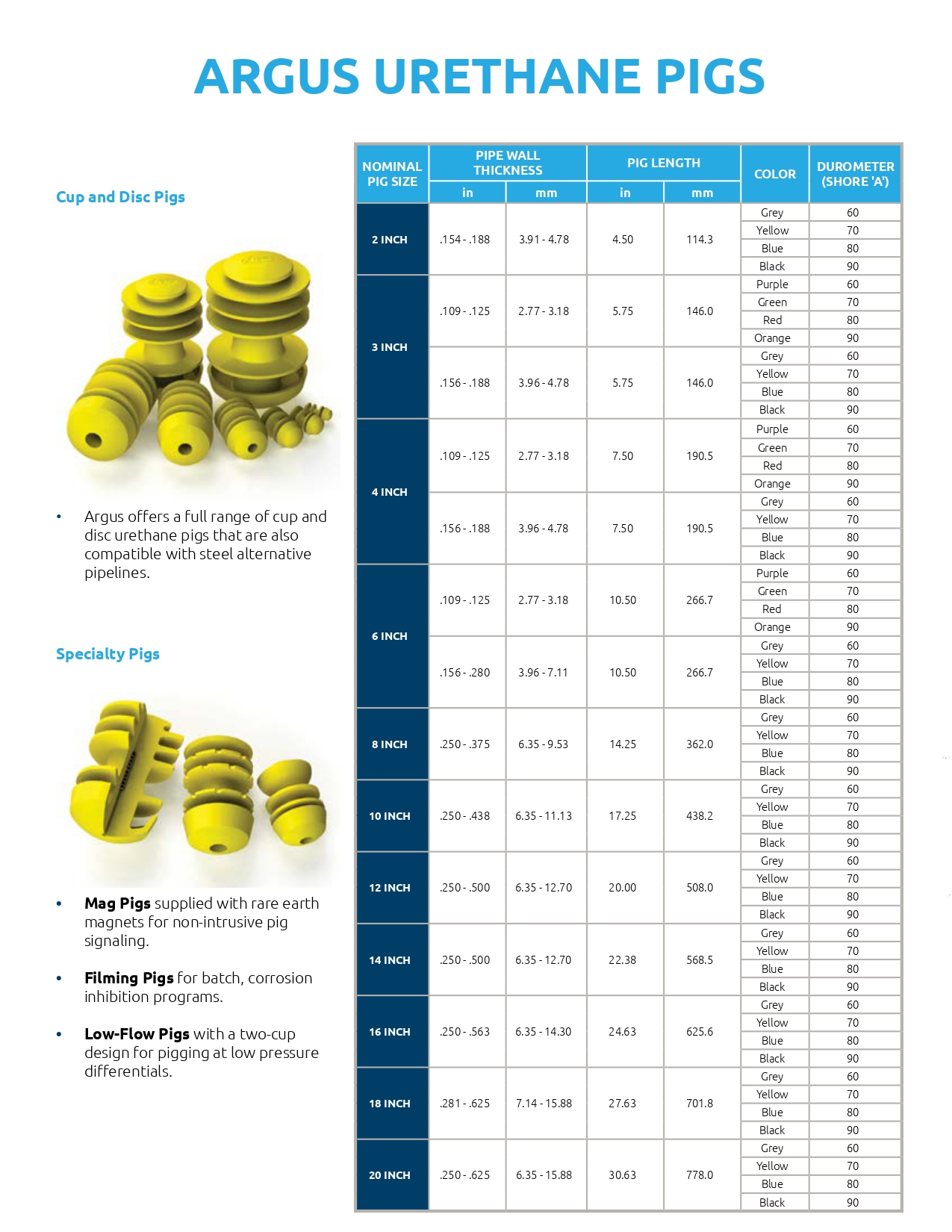
Argus Pig Valves support a range of pigs and compatible inline inspection (ILI) tools. Tool compatibility must be confirmed for the selected valve configuration and application.

Selected Argus Pig Valve installations, with published sizes and pressure classes.


