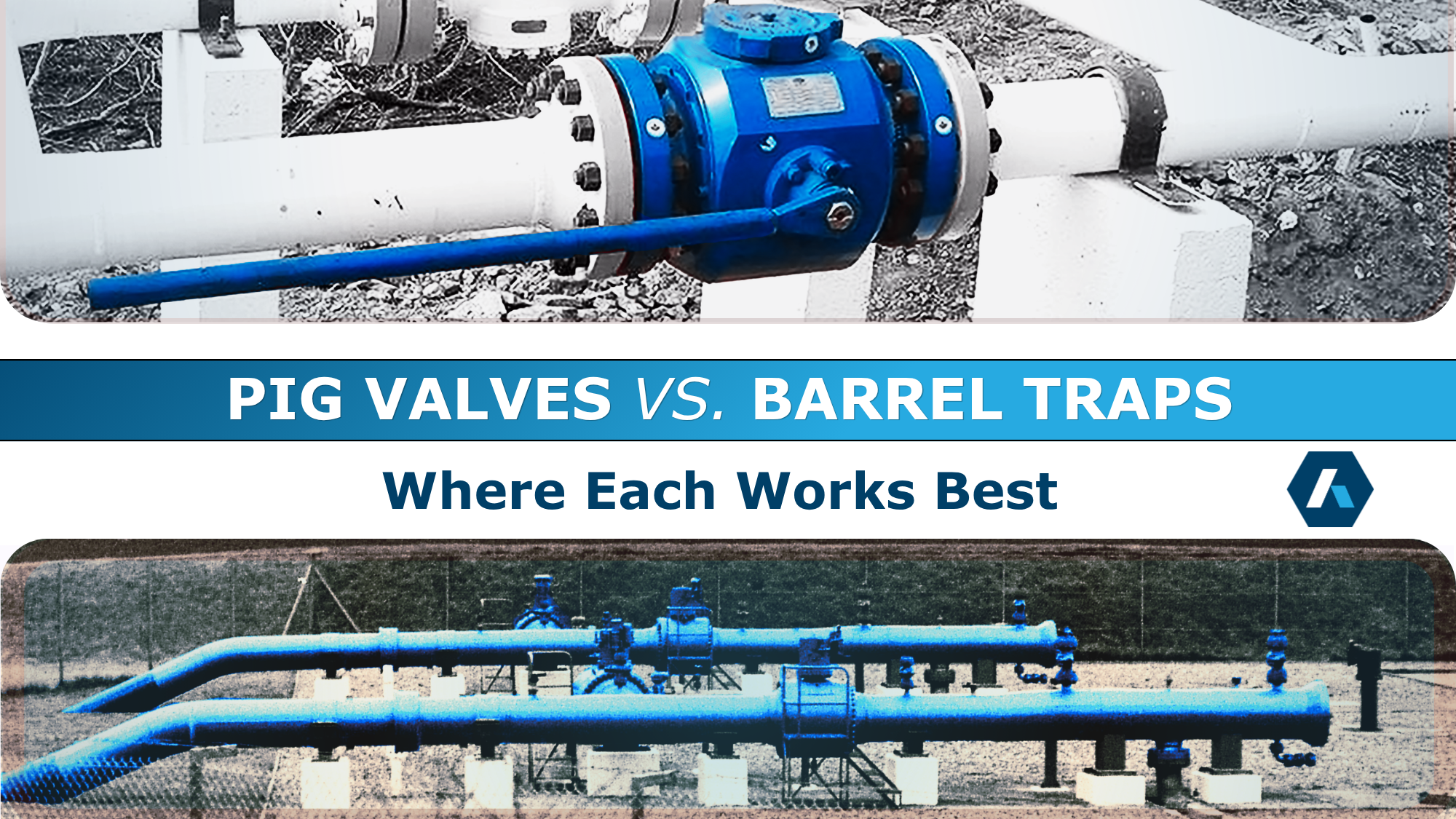

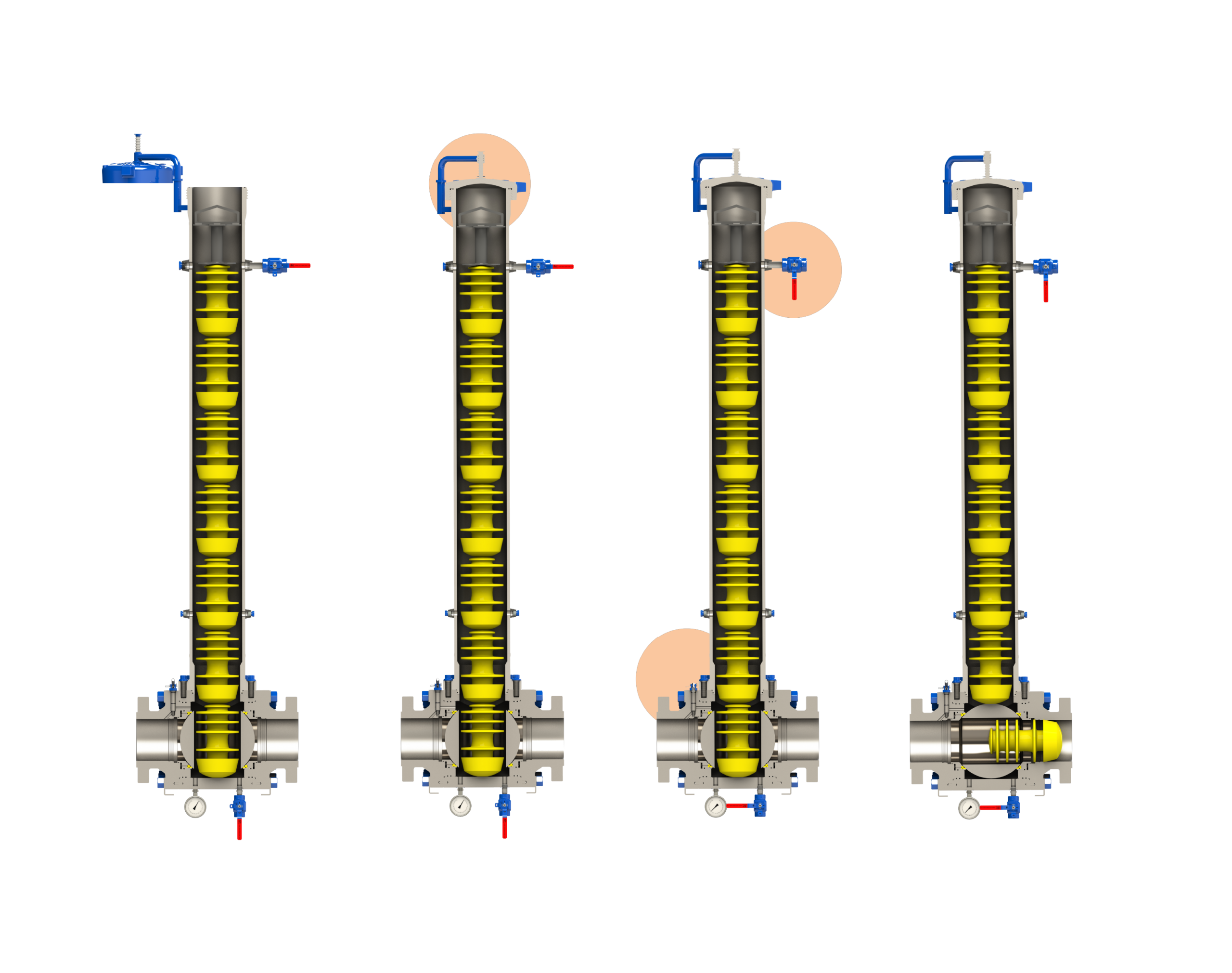
Pipeline pigging is essential for flow assurance and integrity management, but frequent manual launcher operations drive up costs, emissions, and safety risk. Automatic pig valve launchers (APVs) offer a practical, low-complexity solution. using gravity and a multi-pig vertical chamber to automate launches without the mechanical complexity of carousel or subsea systems.
Unlike other automated launchers, APVs require no hydraulics or indexing mechanisms. A simple ball valve, vertical barrel, and follower weight allow operators to preload multiple pigs and launch them remotely at defined intervals, reducing site visits, venting events, and crew exposure.
Key topics covered in the full article:
- How APV launchers work and why vertical orientation matters
- Component breakdown: pigging valve, barrel, follower weight, and actuator
- Limitations around pig-type compatibility and ILI tools and common workarounds
- Best-fit applications: high-frequency sweeping, remote/hard-to-access lines, and emissions/safety-sensitive operations
- How APVs compare to conventional barrel traps and more complex automated systems
In the following article, we review the design concept of automated pigging valves, how they operate, their strengths and weaknesses, and the applications in which they can provide the most value to pipeline operators.